Why Rogue Planets Are the Coolest Cosmic Outlaws in Sci-Fi
The Enigmatic World of Rogue Planets
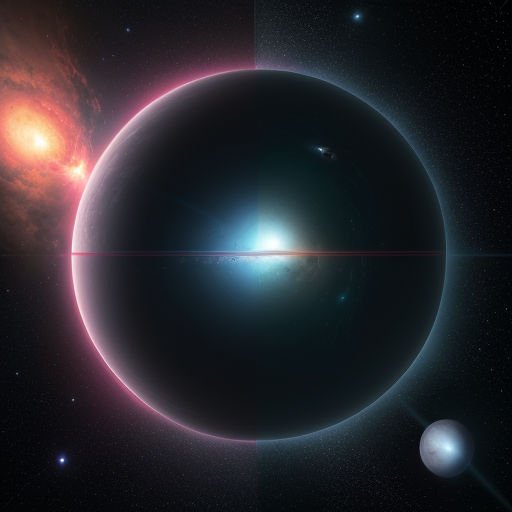
Wandering through the cosmos without a sun to call home, rogue planets have captivated astronomers and science fiction enthusiasts alike. These enigmatic travelers defy conventional planetary norms, floating freely in the vast expanse of space. Unlike traditional planets that orbit a star, rogue planets drift alone, making them both mysterious and challenging to study. Their existence raises fascinating questions about planet formation, survival, and the potential for untapped environments in the universe.
What Exactly Are Rogue Planets?
Rogue planets, also called free-floating or interstellar planets, are celestial bodies that do not orbit a star. They either formed independently or were ejected from their original solar systems through gravitational disturbances.
Key Characteristics
– They have planetary mass, similar to Earth, Jupiter, or even brown dwarfs.
– Lack a parent star, resulting in extremely cold surface temperatures unless internal heat is present.
– Move through interstellar space, making detection more challenging compared to star-bound planets.
How Common Are They?
Current research suggests rogue planets could be numerous, potentially outnumbering stars in our galaxy. A study published in Nature Astronomy estimates there might be billions drifting silently in the Milky Way. Imagine that—a vast, unseen population of wandering worlds in the cosmic ocean.
Formation Theories: How Do Rogue Planets Come to Be?
The origins of rogue planets remain a topic of scientific debate, with two primary formation mechanisms proposed.
1. Ejection from Planetary Systems
Planets can be gravitationally ejected from their parent systems during dynamic interactions with other massive bodies. For example:
– Close encounters with giant planets like Jupiter could scatter smaller planets outward.
– Instabilities during the star formation phase may lead to chaotic orbits and eventual expulsion.
– Collisions or resonance interactions can also push planets beyond their star’s gravitational influence.
This ejection scenario explains why some rogue planets resemble typical exoplanets in composition.
2. Formation in Isolation
An alternative theory posits that rogue planets may form directly from collapsing gas clouds, akin to stars or brown dwarfs but without accumulating sufficient mass for nuclear fusion.
Features supporting this theory include:
– Detection of objects with planetary masses in star-forming regions, unattached to stars.
– The presence of circumplanetary disks indicating planet-like formation processes.
The Science Behind Detecting Rogue Planets
Spotting a rogue planet is no easy feat since these objects don’t emit light like stars. However, advances in technology and detection methods have made it possible to identify several candidates.
Microlensing Events
Gravitational microlensing occurs when a massive object passes between Earth and a distant star, bending its light and creating a temporary magnification. Rogue planets can create such microlensing signals, providing indirect evidence of their existence.
Notable projects like OGLE (Optical Gravitational Lensing Experiment) have uncovered numerous potential rogue planets through this technique.
Direct Imaging
In rare cases, rogue planets close to Earth emitting heat or reflecting ambient interstellar illumination can be directly imaged using infrared telescopes. The Wide-field Infrared Survey Explorer (WISE) has contributed to searching for nearby free-floating planetary mass objects.
Why Rogue Planets Matter in Space Exploration and Adventure
Rogue planets offer a thrilling frontier for both scientific research and imaginative exploration.
Potential Habitats Without a Star
Though lacking sunlight, rogue planets might harbor internal heat from radioactive decay or residual formation energy, possibly sustaining subterranean oceans or even primitive life.
Some hypotheses suggest:
– Thick atmospheres could trap heat effectively.
– Geothermal or tidal heating could maintain liquid water beneath icy surfaces, similar to moons like Europa or Enceladus.
Challenges and Opportunities for Future Missions
Exploring rogue planets will stretch the capabilities of current space missions due to:
– Their vast distances and faint signatures.
– Lack of a central star for navigation and communication aids.
However, their study can deepen understanding of planetary diversity and survival mechanisms in harsh interstellar environments.
– Future probes could be designed to hitchhike on comet-like trajectories or utilize advanced propulsion technologies.
Rogue Planets in Popular Culture and Sci-Fi Adventures
From films to literature, the concept of rogue planets fuels imagination about survival and adventure in deep space.
– Movies like “Dark Star” (1974) introduced audiences to space crew confronting the unknown, echoing the eerie isolation associated with rogue planetary bodies.
– Science fiction novels often depict rogue planets as mysterious refuges or threats, emphasizing their untethered existence.
Such stories shape public interest and inspire scientific inquiry into these solitary wanderers.
Unveiling the Future of Rogue Planet Research
As astronomical instruments become more sensitive, the next decades promise breakthroughs in rogue planet discovery and characterization.
Upcoming projects include:
– The Nancy Grace Roman Space Telescope, set to enhance microlensing surveys, could detect thousands of rogue planet candidates.
– Ground-based observatories equipped with next-gen adaptive optics will improve direct imaging capabilities.
These advancements will not only map the rogue planet population but also reveal insights into their composition, atmospheres, and potential for harboring life.
Scientists remain eager to answer pressing questions:
– How do rogue planets influence galactic evolution?
– Could life truly exist on these isolated worlds?
– What technologies will let humanity visit or study them up close?
A Cosmic Odyssey: Embracing the Mystery of Rogue Planets
Rogue planets represent an extraordinary class of objects challenging our understanding of planetary systems and cosmic evolution. They embody the spirit of space adventure—drifting alone but holding countless secrets about the universe’s diversity.
By studying these silent travelers, we expand the boundaries of exploration beyond the familiar glow of stars, daring to imagine life and landscapes in the cold void.
The next time you gaze at the night sky, consider the hidden rogue planets journeying through darkness. Their stories await discovery, inviting us to embrace the unknown.
Dare to keep watching the skies and supporting missions that venture into the cosmic wilderness. Unlocking the secrets of rogue planets could redefine our place among the stars.













Post Comment